
Start a Savannah Residents Directory Search
Savannah records are split by function. Chatham County is the key jurisdiction for ownership, deeds, taxes, probate, marriage licenses, and most trial-court files. The City of Savannah keeps council material, cemetery deeds, permits, police and fire records, and deep municipal archives. Georgia systems add authenticated voter information, licenses, corporations, corrections records, and vital certificates. A useful residents directory search begins with the source that matches the known clue, then moves to a second record that can test the first result.
Official rolls do not identify every person in a home. The assessor usually names the titled owner, not all occupants. A mailing address may be different from the situs address, and a deed proves a property transaction rather than day-to-day residence. Renters, children, and unlisted household members may appear only in a directory, obituary, census, court file, or other context-specific source.
- Search the Chatham County property roll by owner name, address, or parcel number.
- Use Georgia My Voter Page only for an authorized, authenticated self-lookup.
- Check the GSCCCA index for deeds, liens, plats, and recording references.
- For an earlier era, consult Savannah city directories and Municipal Archives finding aids.
- Request a missing record from its custodian with names, addresses, dates, and record type.
The Savannah Offices Behind Resident Records
The county courthouse, assessor, and voter office each hold a different kind of identity-to-place evidence. The Clerk of Superior Court manages real-estate instruments and older courthouse books. The Board of Assessors ties a parcel to its current owner and mailing contact. The Board of Registrars handles voter services, while the state provides the private My Voter Page. For a whole address chain, use the detailed Savannah street directory workflow.
Chatham County Real Estate Division
133 Montgomery Street, Room 304
Savannah, GA 31401
912-434-8971
Chatham County Board of Assessors
222 W Oglethorpe Avenue, Suite 113
Savannah, GA 31401
912-652-7271
Chatham County Board of Registrars
1117 Eisenhower Drive, Suite E
Savannah, GA 31406
912-790-1520
Search Fields in the Savannah Property Roll
The Chatham County Board of Assessors provides a free GIS-enhanced search. An owner name is useful when the spelling is known; a property address works when the goal begins with a building; and the parcel or PIN is the strongest bridge between the tax card, map, deed, and legal description. Entity names and name variants matter because property may be titled to a trust or company rather than an individual.
| Field | Use | Result clue |
|---|---|---|
| Owner name | Search surname, full name, or entity variants | Owner and mailing address |
| Property address | Enter the situs number and street | Parcel record and map link |
| Parcel/PIN | Use the exact parcel identifier | Legal description and values |
| Legal or subdivision criteria | Narrow an advanced search when offered | Lot, block, or subdivision match |
A parcel card can show ownership, mailing and situs addresses, land and building values, tax district, acreage, exemptions, sales references, and physical details. Homestead status can support owner occupancy, but it is not a full household roll.
Savannah Deeds Link Names to Land
The Georgia Superior Court Clerks' Cooperative Authority index supports name, county, book and page, property, instrument, and PT-61 searches. A result can supply grantor, grantee, instrument type, recording date, book and page, and indexed property detail. Statewide standardized coverage is assured from at least January 1, 1999. Older Chatham County books and grantor-grantee indexes continue in the courthouse record room.
Start with the parcel card's current sale reference, inspect the acquisition deed, then search the grantor as a prior grantee. Compare the legal description at every step because a postal address may change. The Clerk provides public computers but does not conduct title searches. Its local FAQ lists courthouse and website images at 50 cents per page, with certification charged separately.
Record terms. A roll is an official list; an index points to a record; a parcel is one mapped tract; a criss-cross directory runs from address to occupant.
Current Savannah Resident Rolls
No current source lists every Savannah resident. The most useful directory-like records cover a defined group, such as owners, parties to recorded instruments, authenticated voters, litigants, inmates, licensees, or corporate officers. Their limits are part of the answer. A property hit establishes title; a court index establishes a case association; and a voter portal gives a registered person their own election details, not ballot choices.
| Source | Who It Lists | Keeper | Access |
|---|---|---|---|
| Property roll | Titled owners | Chatham Board of Assessors | Free portal |
| My Voter Page | Authenticated registered voter | Georgia Secretary of State | Free self-lookup |
| Real Estate Index | Parties to deeds, liens, and plats | GSCCCA and Superior Court Clerk | Index and paid image options |
| Case lookup | Parties in indexed court matters | Chatham County courts | Free index; files from clerk |
| License and corporation searches | Licensees, officers, and registered agents | Georgia Secretary of State | Free search |
Choose by the fact to verify, not by how many names a portal returns. The Savannah resident lookup explains how to separate same-named people with an address, age clue, case number, employer, or other independent fact.
How Georgia My Voter Page Fits Savannah Research
Georgia My Voter Page is an authenticated service, not an open neighbor list. The user supplies first initial, last name, county, and date of birth. A successful match returns registration status, polling place, districts, sample ballot, and participation history, but never ballot choices. Chatham County's Board of Registrars handles local registration questions and publishes weekday office service.
The official interface can be seen at Georgia My Voter Page.
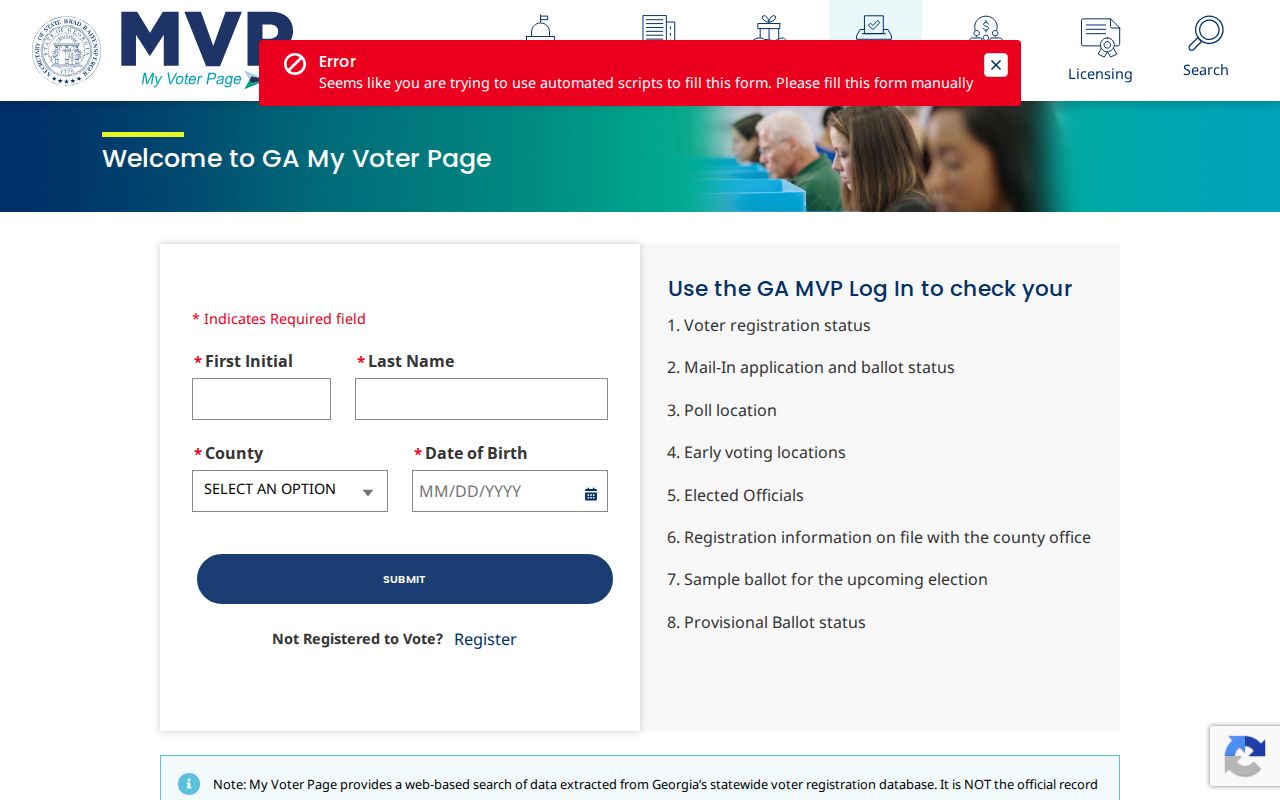
The required county and birth-date fields show why this portal should be used for one's own voter record, not as a public block directory.
Savannah Court Indexes as Name Leads
Chatham County's court gateway links case access for Superior, State, Magistrate, Recorder's, and Probate matters. Search forms can use court, party name, case number, date range, case type, and status. A result may show the court, case number, filed date, party role, charge or claim label, docket events, and disposition where published. Sealed, restricted, juvenile, and expunged material does not appear.
Review the official Chatham County court gateway before deciding which clerk holds a file.
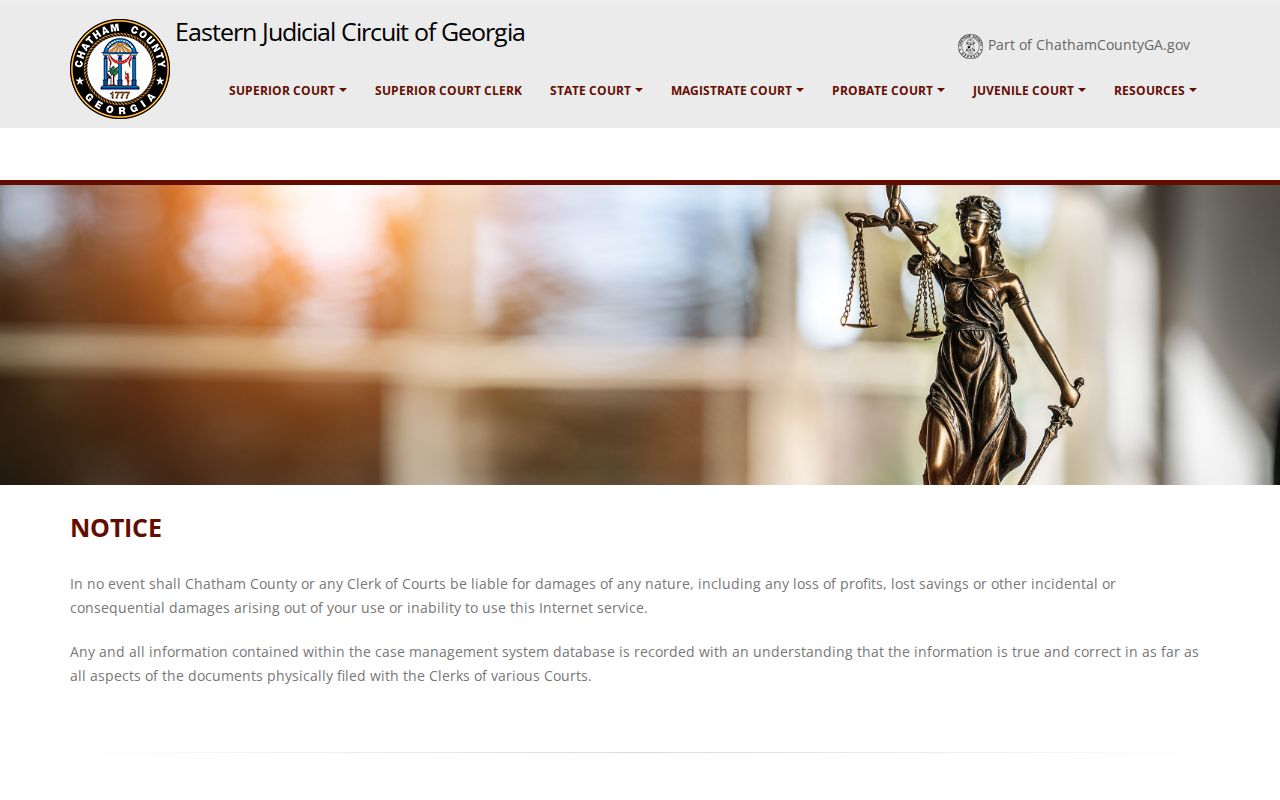
The court and date controls help narrow common names, but the clerk's file remains the source for a complete or certified record.
Requesting Savannah Records That Are Not Online
Savannah's online open-records route covers City departments and lets a requester choose a category, provide contact details, describe the record, attach a file, and select a delivery preference when offered. A strong request names the department, record type, address or person, and a narrow date range. Birth, death, marriage, and divorce questions go to county or state custodians rather than the City.
Under the Georgia Open Records Act, O.C.G.A. §§ 50-18-70 through 50-18-77, an agency generally must produce responsive records or provide a timetable within three business days. Search and administrative labor may be charged after the first quarter hour at the lowest-paid qualified employee's rate, with advance notice when estimated cost passes $25 and prepayment possible above $500.
Lawful personal use. Public access supports research and accountability. Never use a resident record to watch, threaten, harass, or harm a person.
Historical Shelves in the Savannah Residents Directory
Savannah city directories begin with 1848 and 1849 business volumes, followed by resident books from 1850 onward with gaps. The Digital Library of Georgia has digitized volumes from 1871 through 1959, while the Georgia Historical Society reports hardcopy or microfiche for most years from 1848 through 2001. The Kaye Kole Room at Bull Street Library and the Municipal Archives connect those books to newspapers, genealogy databases, tax digests, maps, and city records.
A directory entry may name a head of household, spouse, occupation, employer, and the address used that year. Later street indexes reverse the search from a block to an occupant. Gaps need care: a missing name can reflect publication practice, a move, annexation, or renumbering rather than death. Savannah's full historical-city-directory page explains the abbreviation keys and annual tracing method.
Savannah Municipal Archives Extends the Timeline
The City of Savannah has unusually early municipal holdings. Clerk of Council records reach 1787, and the Municipal Archives preserves tax digests from 1809 to 1903, voter registers from 1856 to 1917, death registers from 1803 to 1853, birth registers from 1889 to 1896, later combined vital registers, burial material, naturalization records, and prisoner books. These are separate series, so researchers should find the series first and then request the relevant volume or box.
Appointments are required for on-site research at City Hall Room 103, Bay and Bull streets. The office answers remote reference questions at 912-651-6412 and is open Monday through Friday, 8:30 a.m. to 5 p.m. Selected genealogy, burial, tax, court, map, oral-history, and funeral-program material is available through digital partners.
Explore the official Municipal Archives overview before arranging a visit.
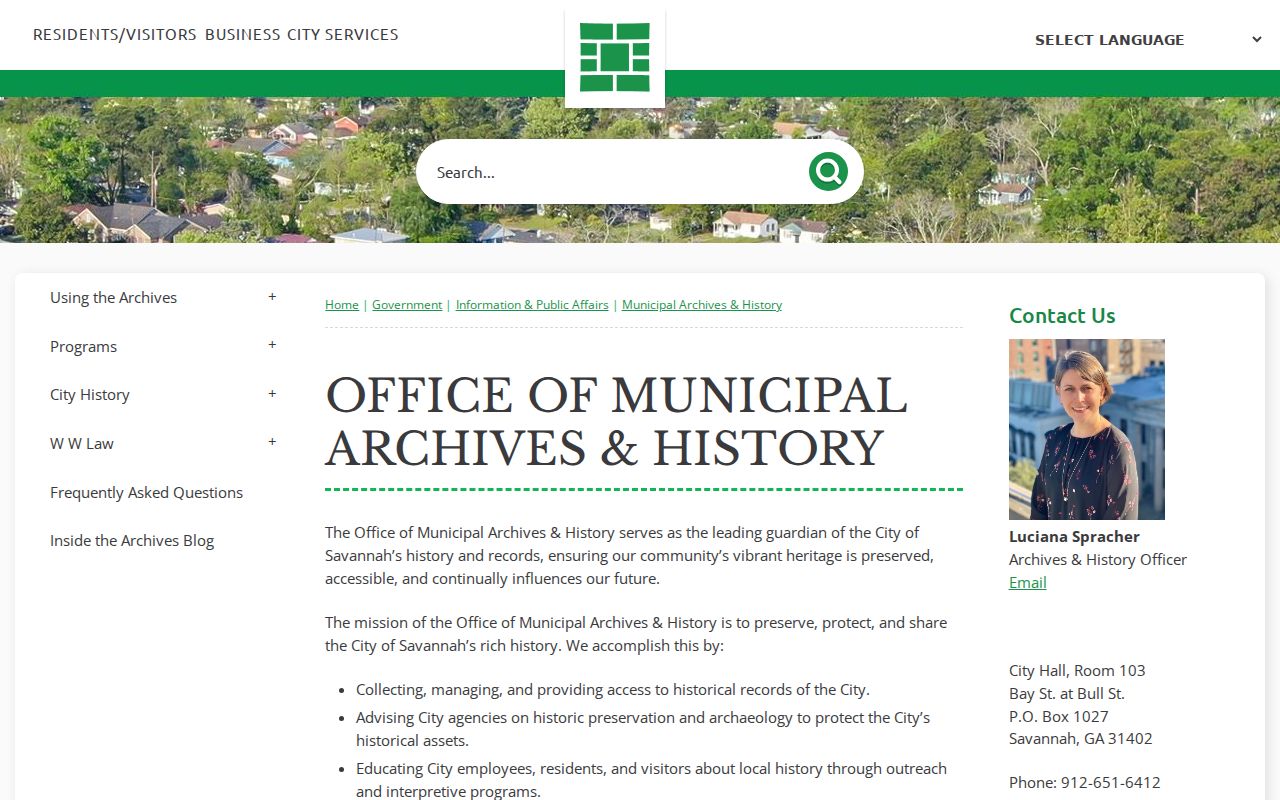
The appointment and contact details make the archive a practical fallback when a resident roll has never been digitized.
Savannah Address History Survives Postal Change
Historic research cannot rely on a modern street number alone. Savannah directory guidance explains numbering north and south from Bay Street and east and west from Bull Street, at roughly 100 numbers per block, with even numbers on north and east sides and odd numbers on south and west sides. Ward and lot descriptions often remain useful when the mailing address changes.
Sanborn fire-insurance maps, directory street indexes, deeds, plats, and permit files can align an old address with a modern parcel. The City's building-research checklist points to tax digests, assessments, transfer books, ground-rent files, permits, city-lot deeds, ward maps, surveys, and improvement books across distinct date ranges. That layered approach turns the Savannah residents directory into a time-aware research trail rather than a simple name list.
Protected Addresses in Savannah Resident Rolls
An absent address does not prove that a person is absent from Savannah. Georgia has two distinct confidentiality routes. Safe at Home, codified at O.C.G.A. § 50-18-150, gives an eligible participant a substitute address and mail forwarding. The program can shield a residence in state and local public records. It covers qualifying survivors of domestic violence, sexual assault, human trafficking, and stalking, as well as other endangered people who meet the sworn application rules.
VoteSafe is narrower. It protects voter-registration residence information for a registered Georgian who has qualifying protective-order or shelter status. Protection lasts four years and requires renewal; a move to another county calls for a new application. The mailing address entered on the form is not confidential. These safeguards explain why an authorized roll or search result can omit a home address without suggesting that the underlying record is false.
Ordinary portal limits matter too. Georgia vital records are confidential under O.C.G.A. § 31-10-25. Contemporary birth certificates are restricted to the registrant and eligible family or legal representatives. A public death copy omits sensitive detail, while access to a certified or full cause-of-death record depends on relationship. Marriage-license and divorce court indexes remain public within their own rules, but an index is not the certificate or decree.
Georgia State Sources That Add Savannah Context
Some resident clues sit outside city and county systems. Georgia's Corporations Division search can show an entity name, status, formation date, registered agent, office, and filing history. Professional Licensing verifies the credential status handled by participating boards. The Department of Revenue's unclaimed-property search is free and may connect a name to a past city, address, or estate, although a public result is only a lead and a claim requires proof.
The Georgia Archives is the offline bridge for older Chatham County deed, probate, marriage, tax, and court material on microfilm or in cataloged record groups. Researchers should verify the exact reel or series before traveling. Combining those state collections with Savannah Municipal Archives, Bull Street Library, and Chatham County offices gives the Savannah residents directory its full span from current indexes to early local records.